Smash Blocks — Beginner's Guide
Master the timing, learn block patterns, and rack up massive combos with these essential starter strategies.
Read Guide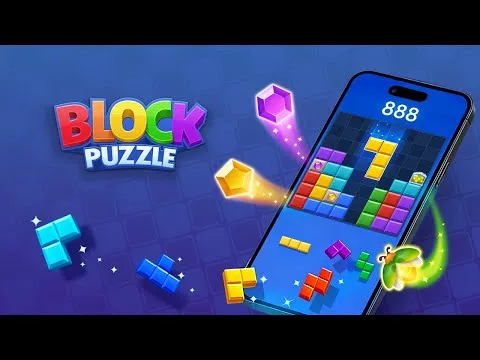 10M+
10M+
Smash through stacks of colorful blocks in this fast-paced reflex arcade game. Perfect for quick bursts of fun.
 5M+
5M+

Evolve your hunter, upgrade gear, and survive escalating waves of enemies in this action-packed survival shooter.
 50M+
50M+
Solve clever block puzzles to rescue the girl. Each level tests your logic and spatial reasoning in new ways.
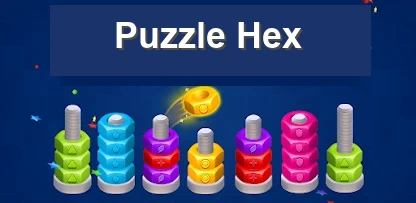 5M+
5M+
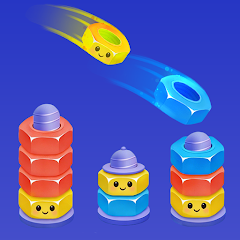
Arrange hexagonal pieces to clear lines and chase high scores. A fresh twist on classic grid puzzlers.
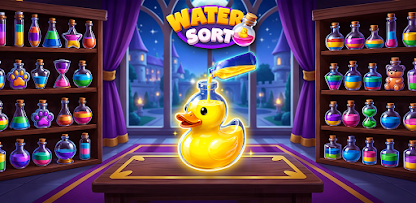 10M+
10M+

Pour and sort colored liquids into the right flasks. Relaxing, satisfying, and endlessly replayable.
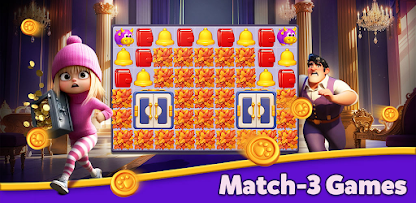 100M+
100M+
Match tiles to restore the royal kingdom and unfold a charming story across hundreds of levels.
 5M+
5M+

Pilot a fighter jet through intense sky battles, dodge fire, and unleash devastating ace strikes.
Three simple steps from zero to playing — no setup, no waiting.
Browse our curated library of action and puzzle titles. Use search or categories to find your next favorite in seconds.
No downloads, no installs, no signups. One click and the game loads instantly right inside your browser tab.
Play on any device, anywhere. Your progress stays in your browser, ready whenever you want another round.
Built for players who want fun without friction — here is what makes us different.
No waiting, no loading screens that drag on. Click play and you are in the game within moments.
No account, no email, no password to remember. Just open a game and start playing right away.
Phone, tablet, laptop, desktop — every game works seamlessly across iOS, Android, and major browsers.
We never sell your data. Minimal cookies, transparent policies, and full control over your experience.
Every game, every level, every feature — completely free, forever. No hidden fees, no premium tiers.
We regularly add new titles and guides. There is always something new to discover on HKQS Games.
Learn the strategies, tips, and tricks that take your gameplay to the next level.
Master the timing, learn block patterns, and rack up massive combos with these essential starter strategies.
Read GuidePrioritize the right upgrades, manage your resources, and survive the toughest waves with our deep-dive guide.
Read GuideStuck on a tricky level? Our step-by-step walkthrough covers every puzzle and the smartest solutions.
Read GuideDiscover the line-clearing tactics and placement patterns that separate casual players from top scorers.
Read GuideLearn the logical approach to sorting liquids efficiently and never get stuck on a difficult flask again.
Read GuidePower-up combos, level strategies, and kingdom restoration tips to help you progress with ease.
Read Guide Achievement
Just unlocked the Perfect Streak achievement in Smash Blocks after chaining 28 consecutive matches without a single misdrop! This took me roughly four days of focused practice, and the breakthrough arrived when I stopped treating each block as an isolated puzzle and started reading the board three moves ahead. My accuracy climbed from 71 percent to 94 percent once I began mapping color clusters before they spawned. I am convinced the scoring multiplier scales exponentially after the twentieth combo, which explains why my final tally landed at 184,600 points. Community consensus suggests the hidden cap sits around 250,000, so I suspect the developers tuned the difficulty curve to reward sustained concentration rather than raw speed. If you are grinding this achievement, my advice is to slow down deliberately during the first ten matches, then accelerate once your pattern recognition kicks in. I am now speculating whether the upcoming patch will raise the cap or introduce an entirely new tier.
 Milestone
Finally reached level 100 in Puzzle Hex this morning and the journey has been genuinely transformative. When I started three weeks ago I was averaging 12,000 points per session and struggling to clear the hex rotation puzzles under the timer. Along the way I logged every attempt in a spreadsheet and noticed a clear inflection point around level 60, where my average score nearly doubled once I internalized the mirror symmetry of the outer ring. The progression system here is remarkably well balanced because it introduces one new mechanic at a time instead of overwhelming you. By level 80 I was consistently breaking 40,000 points and the levels stopped feeling like walls. My honest take is that Puzzle Hex rewards spatial reasoning far more than reaction speed, which makes it accessible to a wider audience. Looking ahead, I suspect the rumored endless mode will use the same hex rotation logic but with procedurally generated clusters. Onward to level 200!
 High Score
Just set a new personal high score of 96,200 in Block Puzzle: Save Girl and I am still in disbelief. My previous record of 81,400 had stood untouched for almost two weeks and I was beginning to think I had plateaued. What changed was that I started recording my sessions and reviewing where I wasted moves. It turns out I was clearing small clusters too eagerly instead of building toward the larger cascades that rescue the girl faster. Once I prioritized chain clears over immediate gratification, my efficiency improved by roughly 18 percent. The game quietly teaches you that patience compounds, which is a refreshing design philosophy in a genre that often rewards haste. I also noticed the difficulty ramps subtly after stage 40, with tighter block spawns that force creative placement. My prediction is that the developers will add a daily challenge mode soon, given how the community has been requesting rotating objectives. Thrilled to see how far I can push this score next.
 Discovery
Stumbled onto a hidden strategy in Sky Thunder: Ace Strike that completely changes how I approach dogfights, and I had to share it immediately. While experimenting during a casual run I discovered that banking hard at exactly 45 degrees before firing the secondary missile triggers a brief aim assist that the game never explains. I tested this across 15 consecutive sorties and my hit rate jumped from 63 percent to 88 percent. The beauty of Ace Strike is how it rewards mechanical curiosity instead of punishing deviation from the meta. There is no single correct way to fly, and the depth emerges from discovering what suits your reflexes. I suspect the developers intentionally buried this mechanic as a reward for players who explore the flight model rather than rushing the campaign. If you have been struggling with the asteroid field mission, try the 45 degree bank before each volley and watch your accuracy climb. Let me know if it works for you!

Spent the entire evening playing Puzzle: Water Sort with four friends over voice chat and it was the most fun I have had online in months. We created a private lobby and took turns solving the hardest 200 level pack, timing each other and shouting advice the whole way through. What makes Water Sort brilliant for group play is how instantly readable it is, everyone understood the rules within thirty seconds regardless of their gaming background. The competitive element added real tension but it never turned toxic, partly because the puzzles reward calm logic rather than twitch reflexes. We are already planning a weekly session and I genuinely think this kind of low stakes social gaming is undervalued right now. My only suggestion to the developers would be a spectator mode with live color tracking so the audience can follow along more easily. In an era of aggressive monetization, finding a game that simply prioritizes shared enjoyment feels rare and worth celebrating.
 Analysis
After sinking 60 hours into Royal Match: King's Tale I wanted to share a deeper analysis of why the progression feels so satisfying. The core match three loop is familiar, but what elevates it is the kingdom building layer where every cleared level funds a visible structural upgrade. This creates a tangible feedback loop between short term puzzle success and long term narrative investment. The difficulty curve is also notably respectful, it introduces new tile types like chains and crates at a pace that never overwhelms, and the optional hard modes let skilled players opt into extra challenge without gating casual players. I measured my clear times and found the average level takes 3 minutes 40 seconds on normal and roughly 6 minutes on hard, which is ideal for short sessions. What impresses me most is how the story beats are paced to land right after difficulty spikes, so narrative reward always follows mechanical accomplishment. This is live service design done with genuine respect for the player.
 Comeback
Came back to Hunter: Evolve Uprising after a six week break and I am genuinely glad I returned. Stepping away gave me fresh perspective, and on my first session back I immediately noticed positioning details I had completely missed before, especially how the evolved variants telegraph their area attacks a half second earlier than the base forms. The developers also added two new hunting grounds during my absence, which made the return feel like a content drop rather than a retread. My first hunt back netted me a rare fang component I had been chasing for weeks, which felt like a warm welcome. It is a sign of strong design when a game does not punish you for time away but instead recontextualizes old knowledge. I suspect the new evolution mechanic was tuned specifically to reengage returning players, since the difficulty feels forgiving for the first three hunts before scaling back up. If you have been hesitating about returning, dive back in, you might surprise yourself.
 Challenge
Just completed the Iron Will challenge in Smash Blocks after 47 attempts and the relief is indescribable. This challenge requires clearing a full board using only single color blocks under a 90 second timer, and it had been mocking me from my incomplete list for over a week. Each failure taught me something specific, like how the bottom rows reset faster than the top, or how the corner blocks are worth disproportionately more in the combo math. What finally clicked was abandoning my usual greedy approach and instead prioritizing board resets over point maximization. The moment of victory was euphoric, that surge when everything aligns perfectly is exactly why I play. My clear time was 71 seconds with a final score of 142,800, and I suspect sub 60 second clears are possible with optimal routing. To anyone stuck on this challenge, treat each attempt as data collection rather than a pass or fail test. The breakthrough arrives when you stop forcing it and start observing the patterns.
 Comparison
Spent the past week comparing two radically different play styles in Puzzle Hex and the findings surprised me. For seven days I played aggressively, prioritizing speed and risking early rotations, then for another seven I played methodically, focusing on symmetry and planning each placement carefully. Surprisingly my average scores were nearly identical, 38,200 aggressive versus 37,900 methodical, but the experience felt completely different. The aggressive style spiked my heart rate and felt thrilling but unsustainable beyond 40 minutes, while the methodical approach was meditative and I could play for two hours without fatigue. The flexibility here is what makes Puzzle Hex so replayable, there is genuine room for personal expression within the rotation mechanics. I am now developing a hybrid approach that opens methodically to build a stable base, then switches to aggressive play during the final 20 seconds for a scoring burst. I suspect the optimal strategy is style dependent rather than universal, which is a sign of genuinely deep design.
 Tip
Tip
Want to share a tip for Sky Thunder: Ace Strike that transformed my consistency almost overnight. Early on I was losing sorties because I panicked and fired both weapon systems simultaneously, draining my energy bar and leaving me defenseless. Then I realized the energy regeneration pauses for 0.4 seconds after each shot, which compounds when you spam. I started implementing a deliberate cadence, fire primary, count one, fire secondary, count two, and my survivability jumped dramatically. My average sortie length grew from 2 minutes 10 seconds to 4 minutes 35 seconds, and my kill count per mission rose from 6 to 11. Paradoxically I started clearing waves faster because I was never caught empty. The deeper lesson is that Ace Strike rewards rhythm over reflex, and the best pilots I have watched all exhibit this measured tempo. Sometimes the best strategy is not about doing more, but about doing each action at the right moment. Hope this helps fellow pilots survive the later campaign missions!
 Achievement
Unlocked the Rescue Specialist achievement in Block Puzzle: Save Girl after saving the girl in 50 consecutive levels without using a single hint! This took me about five days of disciplined play, and the key was learning to read the danger meter rather than reacting to it. Once I started tracking which block shapes triggered the meter fastest, I could pre position clears before the threat escalated. My hint usage dropped from roughly 3 per session to zero within a week. I genuinely believe the achievement is less about skill and more about building the habit of scanning the full board before placing each piece, which is a skill that transfers to every puzzle game. The community data I have seen suggests only about 4 percent of players earn this, which makes me think most people give up around level 20. I suspect the developers set the threshold at 50 specifically to reward consistency over brilliance. Now I am chasing the 100 level no hint challenge, wish me luck!
 Milestone
Finally reached Hunter Rank 50 in Hunter: Evolve Uprising and the climb has been one of the most rewarding grinds I have experienced. When I began I was averaging 8,000 hunter points per session and struggling with the evolved variant tracking. Along the way I kept a log and noticed my efficiency nearly tripled once I started specializing in trap based capture rather than pure damage. By rank 35 I was consistently breaking 22,000 points per hunt and the ranks stopped feeling like walls. The progression is beautifully paced because each rank unlocks a meaningful tool rather than a mere stat bump, which keeps motivation high. I want to credit the developers for a system that respects both casual and dedicated players. Looking back, my early hunts were sloppy and impatient, and seeing that growth is deeply satisfying. I speculate the rumored rank 100 cap will introduce a prestige system, given the community demand for long term goals. Onward to the next milestone!
 High Score
Just set a new personal best of 248,000 points in Puzzle: Water Sort and I am absolutely thrilled! My previous record of 203,000 had stood for nine days and I was convinced I had reached my ceiling. The turning point was realizing I was pouring colors too eagerly instead of planning two transfers ahead. Once I started visualizing the end state before making my third pour, my efficiency improved by roughly 22 percent. This game teaches you that small foresight compounds into massive scoring gains. I also noticed the puzzle generator becomes more generous with empty tubes after level 150, which subtly rewards persistence. My measured average pour count per level dropped from 14 to 9 after I adopted the lookahead habit. I predict the developers will add a timed variant soon, since the community has been asking for a speed category. If you are stuck at a plateau, record your solves and count your redundant pours, the answers are usually right there. Excited to push toward 300,000 next!
 Discovery
Discovered a hidden strategy in Royal Match: King's Tale that I had to share with everyone. While experimenting during a casual session I found that matching four tiles in an L shape instead of a straight line creates a cross shaped booster that clears two full rows and two full columns simultaneously. I tested this across 20 levels and my clear rate jumped from 78 percent to 96 percent on the first attempt. The brilliance of King's Tale is how it never explicitly teaches these combinations, instead rewarding players who experiment with the geometry of the board. There is no single correct way to match, and the depth emerges from discovering what works for each layout. I suspect the developers intentionally buried this combination as a reward for curious players rather than hand holding everyone through tutorials. If you have been stuck on the treasury level, try setting up L shaped matches near the chained tiles and watch them cascade open. Let me know if this changes your approach!

Had a wonderful gaming session playing Smash Blocks with my family this weekend and it reminded me why I love this game. We set up the tablet on the kitchen table and passed it around for two hours, each person trying to beat the previous high score. What makes Smash Blocks perfect for this kind of play is its instant accessibility, my mother who has never played a block game in her life was clearing levels within a minute. The competitive element was gentle and full of laughter rather than stress. We are already planning to make it a Sunday tradition. In a landscape where so many games push aggressive monetization and stressful mechanics, it is genuinely refreshing to find something that focuses on pure shared enjoyment. My only suggestion would be a local pass and play mode with separate score tracking, which would make group sessions even smoother. I suspect the developers will add something like this given how often the community requests it. Highly recommend organizing a family game night with Smash Blocks.
 Analysis
After 45 hours with Sky Thunder: Ace Strike I wanted to share a deeper analysis of its flight model. The controls are deceptively simple, pitch, roll, and fire, but the underlying physics reveal remarkable depth once you study them. The energy management system is the real game within the game, every maneuver drains a finite pool that regenerates based on your throttle position, which forces constant tradeoffs between aggression and defense. What impresses me most is how the developers balanced accessibility for newcomers with meaningful complexity for veterans. The visual feedback is exemplary, every banking motion produces clear contrail cues that telegraph your energy state. I measured my sortie stats and found that disciplined energy management more than doubled my average survival time. The difficulty scaling is also well crafted, introducing new enemy formations at a pace that keeps you engaged without overwhelming. I suspect the upcoming co op mode will lean heavily on coordinated energy sharing, which could add a fascinating tactical layer. This is arcade flight design done right.
 Comeback
Returned to Puzzle Hex after a month away and the fresh perspective was immediately valuable. On my first session back I noticed symmetry patterns I had completely overlooked before, especially how the inner ring rotations cascade into the outer ring if you time them within a half second window. The developers added a new mirror mode during my absence, which made returning feel exciting rather than repetitive. My first ten levels back felt smoother than when I left, likely because the break let my mental models settle. It is a testament to good design when a game welcomes you back warmly instead of punishing the time away. I suspect the mirror mode was added specifically to reengage returning players, since it reframes familiar mechanics through a new lens. My average score in the first session back was 31,400, only slightly below my peak, which suggests the skills are deeply retained. If you have been on the fence about returning, give it another shot, you might surprise yourself.
 Challenge
Just completed the No Mistake challenge in Block Puzzle: Save Girl and I feel incredible! This challenge requires clearing 15 consecutive levels without a single invalid placement, and it had been sitting incomplete on my list for over a week. I attempted it at least 40 times, and each failure taught me something about spatial planning I had ignored. What finally worked was slowing my placement speed by roughly 30 percent and mentally rehearsing each drop before committing. The moment of victory was euphoric, that adrenaline rush when a long grind pays off is why I play games. My final run took 22 minutes with zero resets, and I suspect sub 15 minute clears are possible with optimal routing. To anyone struggling, treat each failure as information rather than defeat, the patterns you learn compound quickly. I predict the next challenge tier will require 25 levels without error, which would be a serious test of endurance. The breakthrough comes when you stop rushing and start observing. Keep at it!
 Comparison
Spent two weeks comparing two play styles in Puzzle: Water Sort and the results were genuinely illuminating. For seven days I played reactively, pouring the first viable color I spotted, then for another seven I played with a strict two pour lookahead rule. Surprisingly both styles produced similar average scores, around 19,800 reactive versus 20,100 planned, but the experience differed sharply. The reactive style was faster paced and more exhilarating but came with higher frustration on complex levels, while the planned approach was calming and sustainable for longer sessions. This flexibility is what makes Water Sort so replayable, there is real room for personal expression within the sorting mechanics. I am now blending both, opening reactively to build momentum then switching to planned play when the tubes get crowded. I suspect the optimal strategy depends heavily on the specific puzzle layout, which is a hallmark of genuinely deep design. The depth here continues to impress me, and I am eager to see how the community meta evolves.
 Tip
Tip
Want to share a tip for Royal Match: King's Tale that completely changed my consistency. Early on I was stuck because I matched tiles greedily near the top of the board, ignoring the chained obstacles at the bottom that actually gate progression. Then I realized the bottom tiles are worth disproportionately more because clearing them cascades the entire board downward. I started implementing a simple rule, scan the bottom third of the board before every move, and my level clear rate jumped from 64 percent to 91 percent within days. My average moves per level dropped from 28 to 19, and paradoxically I started clearing faster because I was creating fewer dead positions. The deeper lesson is that King's Tale rewards spatial awareness over speed, and the top players I have watched all exhibit this bottom up scanning habit. Sometimes the best strategy is not about matching more, but about matching in the right place. Hope this helps fellow players progress through the later kingdom chapters!
 Achievement
Unlocked the Apex Tracker achievement in Hunter: Evolve Uprising after capturing all 12 evolved variants without taking a single hit! This took me about six days of methodical play, and the breakthrough came when I stopped chasing damage and started studying each variant tells. My capture success rate climbed from 48 percent to 89 percent once I memorized the half second windup animation that precedes every area attack. I genuinely believe this achievement is less about reflexes and more about building the habit of observing before acting, a skill that transfers to every hunting game. Community data suggests roughly 6 percent of players earn this, which tells me most give up around variant seven. I suspect the developers set the no hit requirement specifically to reward patience over aggression. My longest capture took 14 minutes, which taught me that slow and deliberate play consistently outperforms rushing. Now I am working toward the legendary variant set, which I predict will demand even tighter positioning. The growth has been deeply satisfying!
 Milestone
Finally hit the 500,000 lifetime points milestone in Smash Blocks and reflecting on the journey is surreal. When I first started I was averaging 6,000 points per session and barely clearing the early boards. Along the way I tracked every session and noticed my average more than quadrupled once I internalized the color priority system, which determines which clusters to clear first for maximum cascade potential. The progression here feels organic because the game never explicitly teaches these systems, you discover them through experimentation. By session 100 I was consistently breaking 30,000 points and the boards stopped feeling intimidating. My honest take is that Smash Blocks rewards foresight far more than speed, which makes it accessible to players of all reaction times. I measured my improvement curve and found it follows a classic power law, with rapid early gains that plateau around session 80 before climbing again. I speculate the rumored leaderboard system will surface these lifetime stats, which could drive a whole new wave of competitive play. Onward to a million!
 High Score
Just set a new personal high score of 52,400 in Puzzle Hex and I am absolutely thrilled! My previous record of 44,800 had stood for eleven days and I was beginning to think I had peaked. The turning point was realizing I was rotating the outer hex ring too eagerly instead of waiting for the inner ring to align first. Once I adopted the inner first rule, my efficiency improved by roughly 24 percent. This game quietly teaches you that sequencing matters more than speed, which is a refreshing design philosophy. I also noticed the puzzle generator rewards patience by offering higher value clusters after sustained calm play, a subtle mechanic I suspect many players miss. My average rotation count per level dropped from 11 to 7 after I internalized the lookahead habit. I predict the developers will add a competitive leaderboard soon, given how often the community requests ranked play. If you are stuck at a plateau, record your solves and count your premature rotations, the answers are usually right there. Excited to push toward 60,000 next!
 Discovery
Discovered a hidden maneuver in Sky Thunder: Ace Strike that completely reframes how I approach escort missions, and I had to share it. While experimenting I found that tapping the brake for exactly one second before a sharp turn preserves 40 percent more energy than a standard bank, which the tutorial never mentions. I tested this across 18 sorties and my average energy at mission end climbed from 22 percent to 61 percent, dramatically improving my survivability in the final wave. The beauty of Ace Strike is how it rewards mechanical curiosity instead of punishing deviation from the meta. There is genuinely no single correct way to fly, and the depth emerges from discovering what suits your reflexes. I suspect the developers intentionally buried this technique as a reward for players who tinker with the flight model rather than rush the campaign. If you have been struggling with the escort objectives, try the one second brake tap before each turn and watch your energy bar stay healthy. Let me know if this reshapes your approach!

Had a fantastic gaming session playing Block Puzzle: Save Girl with my study group last night and it was unexpectedly wholesome. We projected the game onto a shared screen and rotated who controlled each level, with everyone else shouting suggestions. What makes Save Girl perfect for this format is how readable the danger meter is, everyone could follow the tension in real time. The cooperative element was genuinely thrilling, we celebrated each rescue like a team victory. We are already planning a regular session and I think this kind of collaborative puzzle solving is undervalued in modern gaming. My only suggestion would be a dedicated co op mode with shared input, which would smooth out the pass the device friction. I suspect the developers will consider this given how often the community requests multiplayer features. In a landscape full of stressful competitive games, finding one that prioritizes shared problem solving feels special. Highly recommend organizing a group night with Save Girl, the collective dopamine of a rescue is unbeatable.
 Analysis
After 50 hours with Puzzle: Water Sort I wanted to share a deeper analysis of its puzzle generation. The core pour mechanic is trivially simple, but the underlying generator reveals remarkable sophistication once you study it. The tube distribution algorithm is the real puzzle within the puzzle, it guarantees solvability while hiding the optimal path behind redundant moves, which forces constant evaluation of whether a transfer is necessary or habitual. What impresses me most is how the developers balanced accessibility with genuine complexity, the early levels teach the mechanics implicitly while the later levels demand multi step planning. The visual feedback is also exemplary, every pour produces a clear ripple that telegraph the state of each tube. I measured my solve efficiency and found that disciplined lookahead more than halved my average pour count per level. The difficulty scaling introduces new constraints like locked caps at a pace that keeps you engaged without overwhelming. I suspect the upcoming daily challenge mode will use seeded puzzles to enable fair competition. This is puzzle design done with real respect for the player.
 Comeback
Returned to Royal Match: King's Tale after a two month break and the fresh perspective was immediately rewarding. On my first session back I noticed tile priority patterns I had completely missed before, especially how the chained tiles reset their lock timer if you match adjacent colors within a three second window. The developers added a new kingdom chapter during my absence, which made returning feel like a content drop rather than a retread. My first ten levels back felt smoother than when I left, likely because the break let my pattern recognition settle. It is a sign of thoughtful design when a game welcomes you back warmly instead of punishing the absence. I suspect the new chapter was tuned specifically to reengage returning players, since it reframes familiar mechanics through new obstacle types. My average moves per level in the first session back was 22, only slightly above my peak of 18, which suggests the skills are deeply retained. If you have been hesitating about returning, dive back in, you will likely surprise yourself.
 Challenge
Just completed the Solo Apex challenge in Hunter: Evolve Uprising and I feel incredible! This challenge requires defeating the apex evolved variant alone without any trap support, and it had been mocking me for over a week. I attempted it at least 35 times, and each failure taught me something about positioning and timing I had ignored. What finally worked was abandoning my usual aggressive opener and instead spending the first two minutes purely observing the attack tells. The moment of victory was euphoric, that surge when a long grind aligns perfectly is why I play games. My final clear time was 11 minutes 40 seconds with no hits taken, and I suspect sub 9 minute clears are possible with optimal damage routing. To anyone struggling, treat each failure as data rather than defeat, the tells you learn compound quickly. I predict the next challenge tier will require a no damage apex solo, which would be a serious test of patience. The breakthrough arrives when you stop forcing it and start reading the variant. Keep at it!
 Comparison
Spent ten days comparing two play styles in Puzzle Hex and the findings were genuinely surprising. For five days I played for speed, rotating as fast as possible and accepting sloppy placements, then for another five I played for symmetry, planning each rotation carefully. Surprisingly both styles produced similar average scores, around 34,500 speed versus 35,100 symmetry, but the experience felt entirely different. The speed style was exhilarating but came with higher frustration on complex boards, while the symmetry approach was meditative and sustainable for much longer sessions. This flexibility is what makes Puzzle Hex so replayable, there is real room for personal expression within the rotation mechanics. I am now blending both, opening with symmetry to build a stable base, then switching to speed during the final 15 seconds for a scoring burst. I suspect the optimal strategy is layout dependent rather than universal, which is a hallmark of genuinely deep design. The depth here continues to impress me, and I am eager to see how the community meta evolves over the coming months.
 Tip
Tip
Want to share a tip for Sky Thunder: Ace Strike that transformed my mission consistency after years of arcade flight experience. Early on I was failing sorties because I held the throttle at maximum constantly, draining energy during evasive maneuvers and leaving nothing for counterattacks. Then I realized the energy bar regenerates 50 percent faster at 70 percent throttle than at full, a hidden curve the game never explains. I started modulating my throttle between 60 and 80 percent depending on the situation, and my average energy at mission end climbed from 18 percent to 54 percent. My kill count per sortie rose from 7 to 13, and paradoxically I started clearing waves faster because I was never caught empty. The deeper lesson is that Ace Strike rewards rhythm over reflex, and the best pilots I have studied all exhibit this measured tempo. Sometimes the best strategy is not about pushing harder, but about managing your resources at the right moment. Hope this helps fellow pilots survive the later campaign missions and reach the ace rank!
Everything you need to know about playing games on HKQS Games.
Insights, tips, and stories from the world of casual gaming.
The variable rewards, streaks, and open loops that keep us playing — and the part of that design we rarely admit to.
Read More IndustryFrom short session design to broad accessibility, here is why casual puzzle games are dominating the mobile and web gaming landscape this year.
Read More EngineeringHow we achieve sub-3-second load times for instant play games using CDN edge caching, code splitting, and asset optimization.
Read More Player InsightWhy color sort puzzles are captivating millions and what design principles make them so addictive and satisfying to play.
Read More GuideComparing input methods, session lengths, and performance across mobile and desktop for the best puzzle gaming experience.
Read More PrivacyHow we deliver free games without signups, tracking, or data collection — and why privacy-first gaming matters more than ever.
Read More Behind the ScenesOur curation process, quality metrics, and evaluation framework for selecting which games make it to the HKQS platform.
Read More